Posterous theme by Cory Watilo

yt Google+ Hangout tomorrow!

Tomorrow we're going to try something new -- Google Hangouts! If you'd like help with something, to share some feedback, or just to say hi to other community members, stop by Tuesday, May 1st. We'll be starting up around 2PM Eastern and continuing for a couple hours.

If this works out, we'll try it again from time to time, to catch up on new developments, help out with scripts or visualization issues, soliciting feedback, and to chat about using and developing yt.

You'll find the Hangout on the yt Google Plus page.

What's new with yt?

Now that the post-workshop preparations and work have settled down, I thought it might be interesting to share some of the developments going on with yt.  We're still a long way from a new release, so these interim "development" updates are meant to be a bit of a teaser.  As always, these features are either in the main branch or (if noted) in a public fork on BitBucket.  If they sound interesting, drop us a line on yt-dev to see about getting involved!

Stephen has been pushing lately for more consistency in the code base -- indentation, naming conventions, spaces, and so on.  Specifically, he has been suggesting we follow PEP-8, which is a standard for Python source code.  This has gotten a lot of support, and so we're encouraging this in new commits and looking into mechanisms for updating old code.  (Although it can cause some tricky merges, so we're trying to take it easy for a bit!)

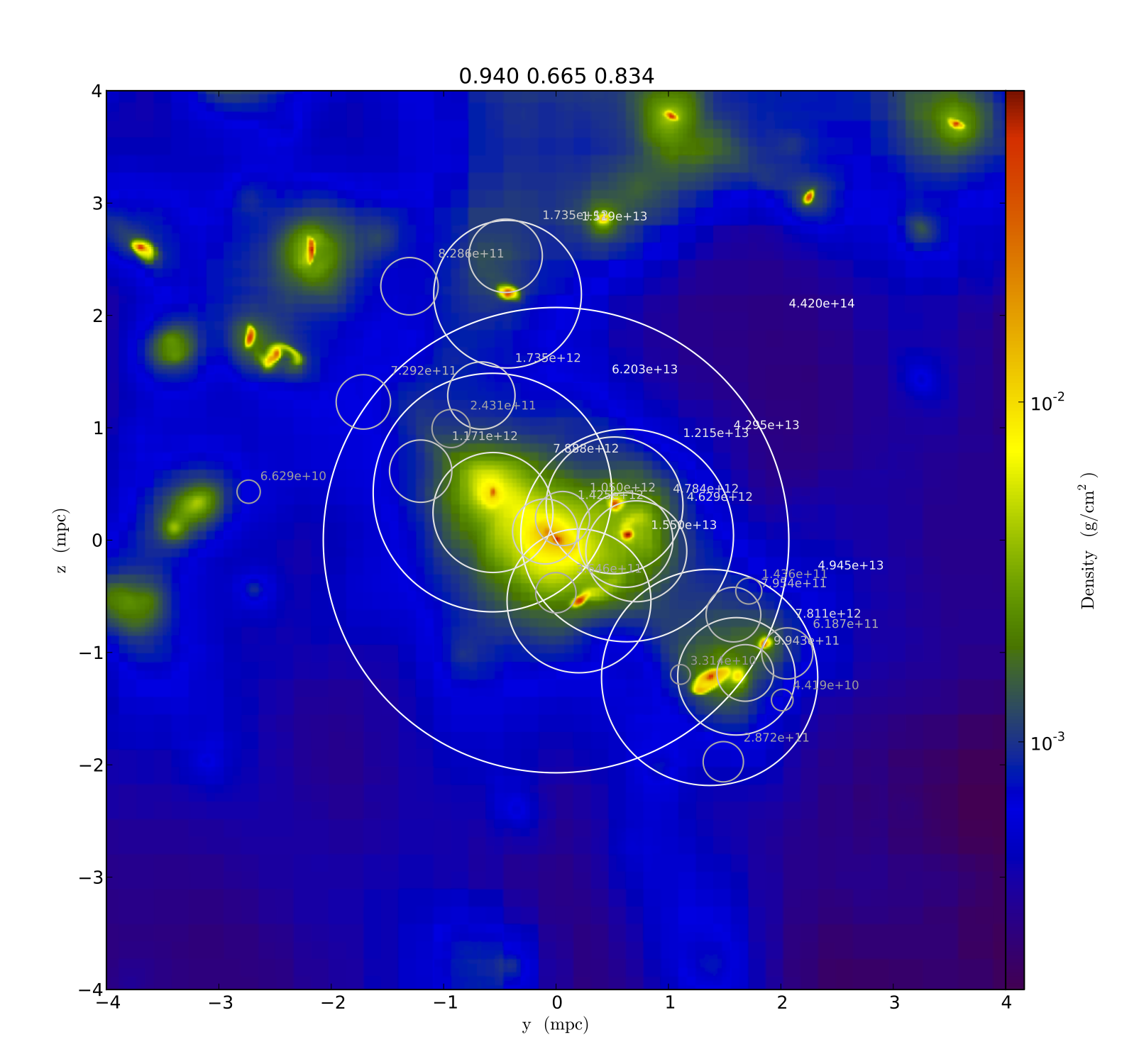
JohnZ recently added a particle trajectory mechanism, for correlating particles between outputs and following them.  This lets you see where they go and the character of the gas they pass through.

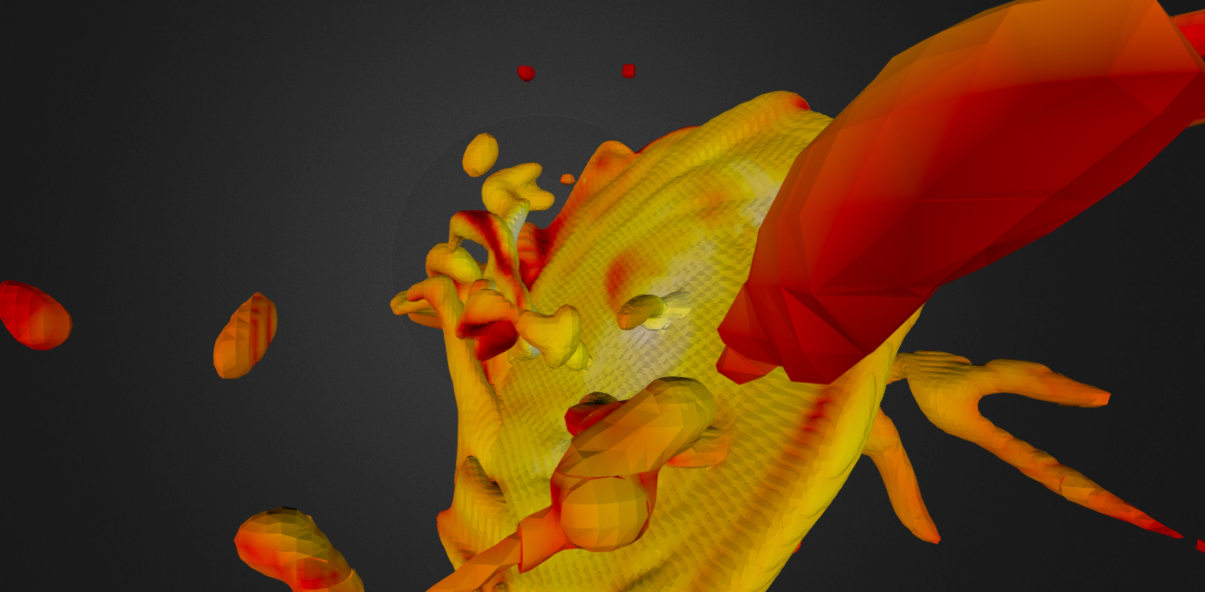
Sam has been looking at improving volume rendering, including adding hard surfaces and a much faster (Cythonized) kD-tree routine.  The initial hard surface stuff looks just great.  (This is all taking place in his fork.)  This code is also threaded, so it should run much faster on multi-core machines.

JohnW identified a bug in the ghost zone generation, which has resulted in a big speedup for generating ghost zones!

Chris has been trying to get the regridding process for ART to be substantially faster, which he's been having success with.  We're now trying to together work on changing how "child masking" is thought of; with patch-based codes it only masks those cells where data at finer levels is available.  We're trying to make it so that it also marks where coarser data is the finest available, which should help out with speed for octree based codes.

Finally, I've been up to working on geometric selection.  My hope is that by rethinking how we think about geometry in yt and removing a number of intermediate steps, we can avoid creating a whole bunch of temporary arrays and overall speed up the process (and add better support for non-patch based codes!).  Results so far have been pretty good, but it's a long ways from being ready.  It's in my refactor fork.

There are a lot of exciting things going on, so keep your eyes on this space!  In addition to all of these things, we've got web interactors for isolated routines, an all-new hub, improvements to reason, and tons of other stuff.  As always, drop by yt-dev or the IRC channel if you'd like to get involved.

yt workshop 2012: a success!

The yt workshop last week in Chicago (
http://yt-project.org/workshop2012/ ) was an enormous success. On
behalf of the organizing and technical committees, I'd like to
specifically thank the FLASH Center, particularly Don Lamb, Mila
Kuntu, Carrie Eder, for their hospitality; the venue was outstanding
and their hospitality touching. Additionally, we're very grateful to
the Adler Planetarium's Doug Roberts and Mark SubbaRao for hosting us
on Wednesday evening -- seeing the planetarium show as well as volume
renderings made by yt users up on the dome was so much fun. The yt
workshop was supported by NSF Grant 1214147. Thanks to everyone who
attended -- your energy and excitement helped make it a success.

Thanks also to the organizing and technical committees: Britton
Smith, John ZuHone, Brian O'Shea, Jeff Oishi, Stephen Skory, Sam
Skillman, and Cameron Hummels. All talks have been recorded, and you
can clone a unified repository of talk slides and worked examples:

hg clone https://bitbucket.org/yt_analysis/workshop2012/

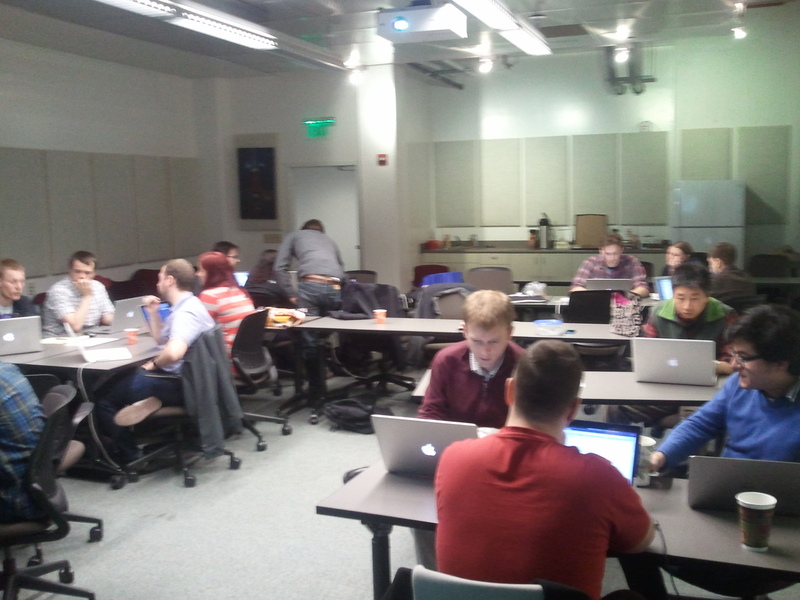
A few photos have been put up online, too:

http://goo.gl/g02uP

As I am able to edit and upload talks, they'll appear on the yt
youtube channel as well as on the yt homepage:

http://www.youtube.com/ytanalysis

Thanks again, and wow, what a week!

Workshop in just a week!

The first yt workshop is in just about a week.  We've updated the website with the current list of talks, along with information about getting to and from the workshop from the conference hotel, and information about how to get the sample data.  Keep your eyes on the website in the lead up to the workshop, as we'll be posting a script for fisheye lens renderings for our viz night at the Adler, information about the talks and example scripts, and other useful info.  Once the workshop is over we'll update with links to the full videos of the talks, the slides, and scripts.

yt Version 2.3 Announcement

Just in time for the New Year, we’re happy to announce the release of yt version 2.3!  ( http://yt-project.org/ )  The new version includes many new modules and enhancements, and the usual set of bug fixes over the last point release. We encourage all users to upgrade to take advantage of the changes.

yt is a community-developed analysis and visualization toolkit for astrophysical simulation data. yt provides full support for Enzo, Orion, Nyx, and FLASH codes, with preliminary support for the RAMSES code (and a handful of others.)  It can be used to create many common types of data products, as well as serving as a library for developing your own data reductions and processes.

Below is a non-comprehensive list of new features and enhancements:


  • Improved and expanded documentation located at http://yt-project.org/doc/.
  • Boolean logic data containers (joins, intersections and nots) to select arbitrary data regions.
  • Multi-level parallelism for subgroups of MPI tasks.
  • Extensive answer tests.
  • Isocontouring and flux-over-surface calculations, with WebGL interface.
  • A reorganized field system.
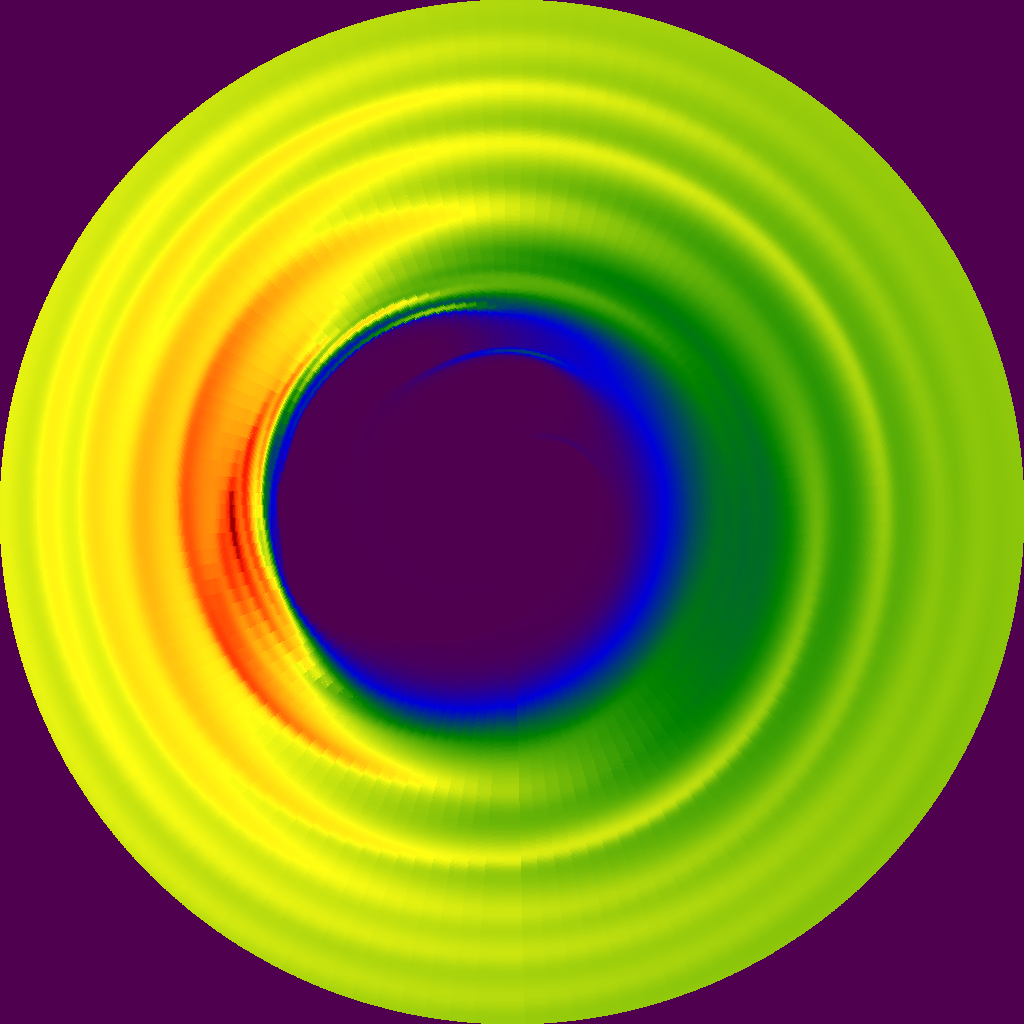
  • Adaptive resolution HEALpix-based all-sky volume rendering.
  • Radial column density calculations.
  • Memory usage, performance enhancements and bug fixes throughout the code.


Everything, from installation, to development, to a cookbook, can be found on the homepage: http://yt-project.org/

We have updated the libraries installed with the install script; for more information, see the “Dependencies” section of the yt docs at http://yt-project.org/doc/advanced/installing.html.

Development has been sponsored by the NSF, DOE, and various University funding. We invite you to get involved with developing and using yt!

We’re also holding the FIRST YT WORKSHOP from January 24-26 at the FLASH center in Chicago.  See the workshop homepage for more information!  http://yt-project.org/workshop2012/

Please forward this announcement to interested parties.

Sincerely,

    The yt development team


Boolean Data Containers

A useful new addition to yt are boolean data containers. These are hybrid data containers that are built by relating already-defined data containers with each other using boolean operators. Nested boolean logic, using parentheses, is also supported. The boolean data container (or volume) is made by constructing a list of volumes interspersed with operators given as strings. Below are some examples of what can be done with boolean data containers.

The “OR” Operator

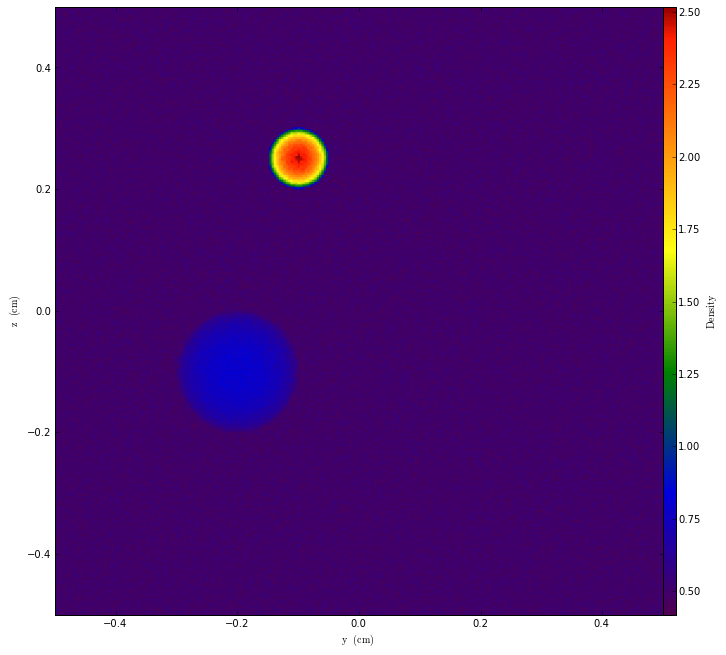
The “OR” operator combines volume of the two data containers into one. The two intial volumes may or may not overlap, meaning that the combined volume may constitute several disjoint volumes. Here is an example showing the construction of a boolean volume of two disjoint spheres:

sp1 = pf.h.sphere([0.3]*3, .15)
sp2 = pf.h.sphere([0.7]*3, .25)
bool = pf.h.boolean([sp1, "OR", sp2])

Here is a short video showing the result:

The “AND” Operator

The “AND” operator mixes two volumes where both volumes cover the same volume. Put another way, the “AND” operator produces a new volume that is defined by all cells that lie in both of the initial volumes. Here is an example of the intersection of a sphere and a cube:

re1 = pf.h.region([0.5]*3, [0.0]*3, [0.7]*3)
sp1 = pf.h.sphere([0.5]*3, 0.5)
bool = pf.h.boolean([re1, "AND", sp1])

Here is a short video showing the result:

The “NOT” Operator

The “NOT” operator is the only non-transitive operator, and is read from left to right. For example, if there are multiple “NOT” operators, the first “NOT” on the left and the two volumes on either side are considered first. The new volume constructed is the volume contained in the first data container that the second data container does not cover. This can be thought of as a subtraction from the first volume by the second volume. Here is an example of a cubical region having a corner cut out of it:

re1 = pf.h.region([0.5]*3, [0.]*3, [1.]*3)
re2 = pf.h.region([0.5]*3, [0.5]*3, [1.]*3)
bool = pf.h.boolean([re1, "NOT", re2])

Here is a short video showing the result:

Nested Logic

It is possible to use nested logic using parentheses. When nested logic is used, the order of logical operations begins at the inner-most nested level and proceeds outwards, always respecting the left to right ordering for “NOT” operations. This may be used to create truly fantastic volumes. Here is an example of a piece of Swiss cheese created from two cubical regions and two spheres. The second sphere sp2 wraps around the periodic boundaries and impacts the largest cube in more than one place.

re1 = pf.h.region([0.5]*3, [0.]*3, [1.]*3)
re2 = pf.h.region([0.5]*3, [0.5]*3, [1.]*3)
sp1 = pf.h.sphere([0.5, 0.7, 0.5], .25)
sp2 = pf.h.sphere([0.1]*3, .25)
bool = pf.h.boolean([re1, "NOT", "(", re2, "AND", sp1, ")", "NOT", sp2])

Here is a short video showing the result:

For those wondering how the movies were made, I’ve posted the script here. Note that blocks of comments will need to be turned on/off to get the desired boolean data container.

yt Testing & Parallelism

Hi all,

A few of us worked this past week on a couple yt projects and made what we think is significant progress.  Two of the items we focused on were testing and parallelism.    

For testing, we've broadened the test suite to include many more functions and derived quantities.  We now have 548 tests that include (off and on-axis) slices, (off and on-axis) projections, phase distributions, halo finding, volume rendering, and geometrical region cuts such as rectangular solids, spheres, and disks.  We use both plain and derived fields for these tests so that it covers as many bases as possible.  With this framework, we are now able to keep a gold standard of the test results for any dataset, then test later changes against this standard.  These tests can test for bitwise identicality or allow for some tolerance. For a full list of tests, you can run python yt/tests/runall.py -l, and use --help to look at the usage.  We will soon be updating the documentation to provide more information on how to set up the testing framework, but I think all of us agree that this will make it much easier to test our changes to make sure bugs have not crept in.

The second big change I'd like to talk about is the way we now handle parallelism in yt.  Previously, methods that employed parallelism through MPI calls would first inherit from ParallelAnalysisInterface, which had access to a ton of mpi functions that all work off of MPI.COMM_WORLD.  In our revamp we wanted to accomplish two things: 1) merge duplicate mpi calls that were only different by the type of values they work on and do overall cleanup. 2) Allow for nested levels of parallelism where two (or more) separate communicators are able to use barriers and collective operations such as allreduce.  To do this, we worked in a two-step process.  First we took things like:

    def _mpi_allsum(self, data):
    def _mpi_Allsum_double(self, data):
    def _mpi_Allsum_long(self, data):
    def _mpi_allmax(self, data):
    def _mpi_allmin(self, data):

and packed it into a single function:

    def mpi_allreduce(self, data, dtype=None, op='sum'):

When a numpy array is passed to this new mpi_allreduce, dtype is determined from the array properties.  If the data is a dictionary, then it is passed to mpi4py's allreduce function that acts on dictionaries.  This greatly reduced the number of lines in parallel_analysis_interface (1376 ==> 915), even after adding in additional functionality.

The second step was bundling all of these functions into a new class called Communicator.  This Communicator object is initialized with an MPI communicator that no longer is restricted to COMM_WORLD.  Using this as the fundamental MPI object, we then built a CommunicationSystem object that manages these communicators.  A global communication_system instance is created, that is initialized with COMM_WORLD at the top of the system if the environment is mpi4py-capable.  If not, an empty communicator is created that has passthroughs for all the mpi functions.

Using this new framework we are now able to take advantage of multiple communicators.  There are two use cases that we have implemented so far: 
1) parallel_objects
parallel_objects is a method un parallel_analysis_interface.py for iterating over a set of objects such that a group of processors work on each object.  This could be used, for example, to run N projections each with M processors, allowing for a parallelism of NxM.  

2) workgroups
workgoups allows users to set up multiple MPI communicators with a non-uniform number of processors to each work on a separate task.  This capability lives within the ProcessorPool and Workgroup objects in parallel_analysis_interface.py

These are just the first two that we tried out and we are very excited about the new possibilities.  

With these changes, there was one implementation change that has already come up once in the mailing list.  When you implement a new class that you'd like to have access to the communication objects, you must first inherit ParallelAnalysisInterface, and then make sure that __init__ makes a call to:
ParallelAnalysisInterface.__init__()

At that point, your new class will have access to the mpi calls through the self.comm object.  For example, to perform a reduction one would do:
self.comm.mpi_allreduce(my_data, op='sum')

As I said before, this will be documented soon, but hopefully this will help for now.

Sam, Britton, Cameron, Jeff, and Matt


Announcing the 2012 yt Workshop

I'm pleased to announce the 2012 yt Workshop at the FLASH Center in Chicago, January 24-26.

The workshop will be aimed at both users and developers of yt.  We will begin with intensive user training, moving from basic usage to advanced and parallel usage.  Users are encouraged to bring their ideas and prototypes for new analysis routines as there will be opportunities to work with more experienced developers.  We will then address to how to modify, extend and contribute to yt, and transition to a developers workshop.  In the developers portion of the workshop, we will discuss ideas for improvements to the code and then break into groups to implement new features.  Users are highly encouraged to stay and participate in development.

The FLASH Center has graciously offered to host the workshop.  We have identified a hotel in downtown Chicago (near the river, just off Michigan Avenue) that we are able to book double-occupancy rooms for $99/night, pre-tax.  We are actively pursuing funding opportunities, but as of yet have not secured funding for participant costs; if we are able to do so, it will likely cover hotel stays for a limited number of individuals willing to share rooms for the four nights of the workshop (Jan. 23-26).

As we prepare hotel reservations, funding applications and other technicalities, we need to get a sense of not only how many people are potentially going to attend, but also their current career stage, funding availability and so on. If you are interested in attending the workshop, we would greatly appreciate it if you would visit the following URL and fill out the Google Form: http://goo.gl/xElrB .  If you have already filled it out, no need to do it again!

Once we have the details of the conference settled, further information will be forthcoming regarding registration, accommodations, and possible financial support.

For specific questions regarding the workshop, please email John ZuHone at jzuhone [at] milkyway.gsfc.nasa.gov.